STARTUP
How Officebing Is Quietly Reshaping India's Landlord-Operator Playbook
Officebing is reshaping India’s commercial real estate partnerships by positioning workspace operators as strategic asset partners, helping landlords improve building performance, occupier experience and long-term competitiveness.
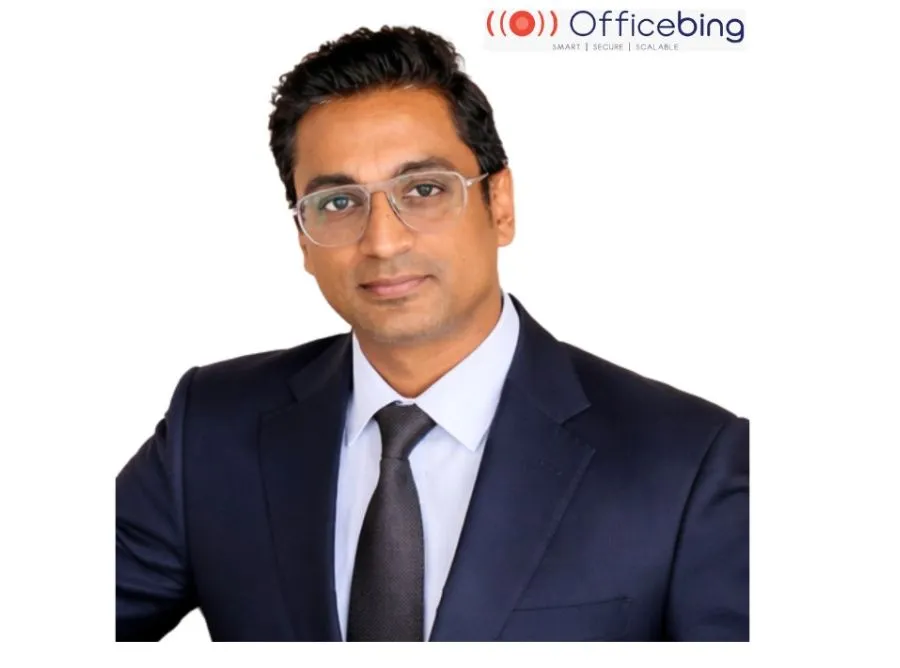
Rohit Gawali, Co-Founder, Officebing
Commercial real estate has always been shaped by partnerships, but the nature of those partnerships is changing.
For decades, the relationship between landlords and occupiers was relatively straightforward. Property owners focused on constructing and maintaining office assets, while businesses leased space for fixed periods with little interaction beyond the terms of the lease. Today, however, the commercial office market demands a far more collaborative approach. Buildings are expected to adapt to changing occupier needs, respond quickly to market shifts and remain competitive throughout their lifecycle.
This evolution has quietly elevated the role of the managed workspace operator from tenant to strategic partner.
Asset Performance Has Become the New Benchmark
The conversation around commercial real estate has expanded beyond occupancy rates and rental yields. Landlords are increasingly evaluating how efficiently their assets perform over time, how quickly they can respond to changing market demand and how effectively their buildings attract and retain high-quality occupiers.
This shift is reflected in broader market activity. India's office sector recorded its strongest-ever first half, with 45.5 million square feet of gross leasing in H1 2026, according to CBRE's India Office Figures Q2 2026. Enterprise occupiers, Global Capability Centres (GCCs) and flexible workspace operators accounted for a significant share of this demand, reinforcing the need for commercial assets that can respond to evolving business requirements.
As office demand becomes more sophisticated, landlords are recognising that the long-term competitiveness of a building depends not only on its location but also on how effectively it is positioned, managed and activated.
Operators Are Becoming Asset Partners
One of the most significant changes in recent years has been the expanding role of workspace operators.
Earlier, operators were often viewed primarily as occupiers taking large lease positions. Today, they contribute across multiple aspects of an asset's performance, from workplace planning and space activation to occupier engagement and day-to-day building operations.
This creates a fundamentally different relationship with landlords.
Instead of simply leasing space, operators increasingly work alongside asset owners to ensure commercial buildings remain relevant in a market where occupier expectations continue to evolve. Success is measured not only by leased square footage but by how effectively a building serves its users over time.
Every Building Requires a Different Strategy
No two commercial buildings serve the same market.
A property located in a financial district will naturally attract different occupiers than one positioned within an emerging technology corridor or a manufacturing hub. Similarly, enterprise requirements vary significantly between startups, consulting firms, financial institutions and Global Capability Centres.
This is why a standard operating model rarely delivers the best outcome.
At Officebing, every partnership begins with understanding the property's strengths, the surrounding business ecosystem and the landlord's long-term objectives. Rather than applying identical workspace formats across locations, we believe each commercial asset deserves an operating strategy that reflects its unique market potential.
That philosophy has guided our expansion across Navi Mumbai, where our centres have been developed to serve distinct business communities while maintaining consistent service standards.
The Value of Collaboration
The greatest advantage of the landlord-operator model lies in alignment.
Landlords bring long-term investment, local market understanding and high-quality real estate. Operators contribute workplace expertise, customer engagement, technology integration and operational management. When both parties work towards shared commercial objectives, the outcome extends well beyond filling office space.
Buildings become more responsive to occupier requirements. Businesses can establish operations faster. Workplace services evolve continuously rather than remaining static throughout a lease cycle. The result is a commercial environment that supports both property performance and occupier satisfaction.
Increasingly, this collaborative model is becoming an important differentiator in India's office market.
Enterprise Demand Is Raising Expectations
The continued expansion of GCCs and large corporate occupiers is further accelerating this transition.
JLL's Q1 2026 India Office Market Update reported that GCCs accounted for 45.5% of gross office leasing, while flexible workspace operators contributed 25.9%, highlighting the growing role of professionally managed workplaces within India's office ecosystem.
These occupiers are no longer evaluating office space solely on rental economics. Speed of occupancy, operational consistency, workplace technology, business continuity and long-term flexibility have all become important considerations.
Meeting these expectations requires stronger collaboration between landlords and workspace operators long before an occupier moves into the building.
Looking Beyond the Lease
The future of commercial real estate will be shaped less by conventional leasing models and more by how effectively landlords and operators work together.
Buildings that continue to evolve alongside changing occupier requirements will remain competitive long after the initial lease has been signed. Those partnerships require transparency, shared objectives and a long-term commitment to improving how commercial assets perform.
At Officebing, we believe the landlord-operator relationship should be viewed as an ongoing collaboration rather than a contractual arrangement. When both sides focus on creating stronger assets instead of simply completing transactions, the benefits extend to landlords, occupiers and the broader commercial real estate ecosystem alike.
As India's office market enters its next phase of growth, the most successful commercial buildings will not necessarily be those with the highest rents or the newest addresses. They will be the ones backed by partnerships that continuously create value long after the keys have been handed over.
The author of this article is - Rohit Gawali, Co-Founder, Officebing.