INDIAN BUSINESS
Keeping Critical Industry Moving: How Khimji Flow Is Safely Operating Through COVID-19
As COVID-19 disrupted industrial operations worldwide, Khimji Flow adapted its manufacturing, workforce and logistics practices to safely maintain the supply of critical valves to essential industries.
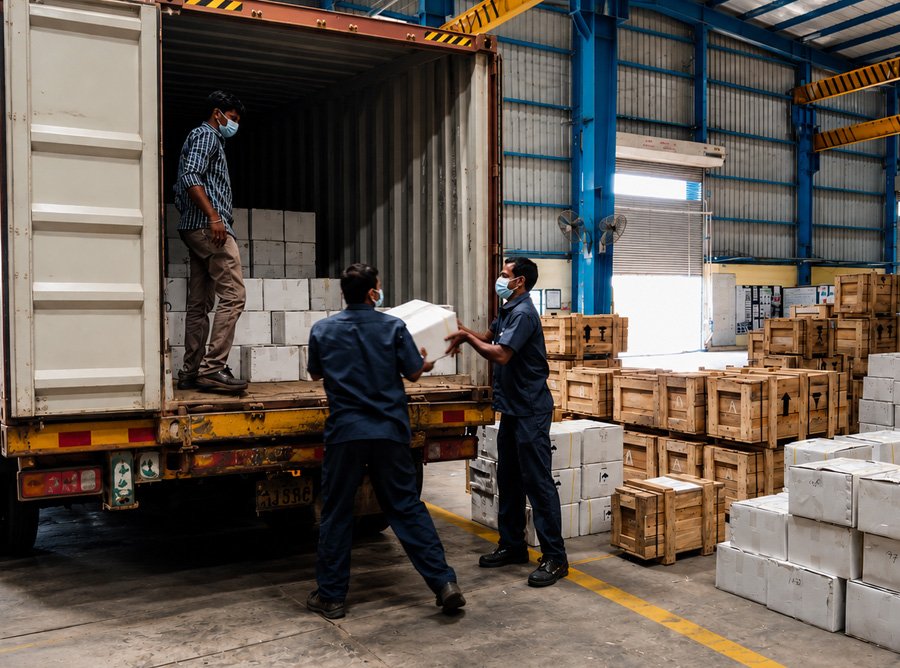
Workers manage the safe handling and dispatch of consignments at Khimji Flow’s manufacturing facility.
As the world continues to navigate the unprecedented disruption caused by COVID-19, much of the conversation has focused on how businesses are adapting to the new normal. But behind every essential industry that continues to operate from oil & gas and chemicals to power, steel and other process industries there is a network of critical engineering businesses quietly keeping operations running.
Industrial valves are one such critical linchpin. They control, regulate and isolate the flow of fluids and gases across some of the country’s most essential industrial facilities. Even during a pandemic, refineries, power plants, chemical facilities and other critical industries cannot simply stop. Their operations require dependable equipment and a reliable supply chain.
One important example of such an industry is BDK, which has now been renamed Khimji Flow. Even during these challenging times, the organisation has continued its operations while implementing stringent safety measures to protect its people and maintain continuity for customers across critical industries.
Keeping Operations Running Safely
For a manufacturing organisation, operating during COVID-19 is not simply about maintaining production. It requires an entirely new approach to how people enter the workplace, how teams interact, how products are handled and how materials move through the supply chain.
At Khimji Flow, the focus has been on demonstrating that manufacturing continuity and employee safety can go hand in hand.
Rather than allowing the challenges created by the pandemic to bring operations to a standstill, the organisation has introduced multiple measures designed to minimise risk while keeping essential manufacturing and dispatch activities moving.
Social Distancing on the Shop Floor
Social distancing has been incorporated into everyday operations, with teams organised to minimise unnecessary physical interaction. Work practices have been adapted so that essential activities can continue while maintaining appropriate distance between employees.
Working in Shifts
Production and other operational activities have been organised around shifts wherever required. This helps reduce the number of people present at the facility at any given time while allowing manufacturing operations to continue.
Controlled Entry Into the Factory
Access to the factory is subject to strict health and safety protocols. Temperature checks are conducted before entry, and appropriate COVID-19-related health documentation and testing requirements are followed for personnel entering the premises.
The objective is simple: ensure that the workplace remains as safe as possible for everyone inside it.

The responsibility does not end when a valve leaves the factory.
Khimji Flow has taken additional precautions in handling dispatches, including sanitising outgoing consignments before they leave the facility. This additional step is intended to reduce potential risks during the movement of products through the logistics chain.
Supporting Safe Transportation
Transport is another critical link in keeping industrial supply chains operational.
Khimji Flow has worked with transporters to ensure that dispatches can move safely and efficiently despite the restrictions and precautions introduced during the pandemic. Coordination with logistics partners has become an important part of maintaining continuity without compromising safety.
Safety as an Operational Discipline
These measures represent more than a collection of individual precautions. Together, they reflect a change in the way manufacturing operations are managed during a pandemic.
From the moment an employee or visitor approaches the factory to the moment a finished valve is dispatched, safety considerations have become part of the operational process.
For an industrial valve manufacturer serving critical sectors, this is particularly important. A disruption at one point in the supply chain can ultimately affect an entire industrial operation.
Khimji Flow’s approach demonstrates that with planning, discipline and the right precautions, critical manufacturing operations can continue even in extraordinary circumstances.
Innovation When It Matters Most
The ability to adapt in difficult circumstances comes from a long-standing culture of engineering and innovation.
The story of BDK itself began with a response to India’s industrial needs. In 1975, Shri Bharat B. Khimji established BDK in honour of his father, Shri Bhanji D. Khimji, with the vision of building dependable industrial valves in India at a time when the country’s industrial infrastructure was rapidly developing.
Over the following decades, BDK grew into a respected name in industrial valve manufacturing, serving demanding applications across critical industries in India and overseas.
Today, BDK has been renamed Khimji Flow Equipments Pvt. Ltd. The name has changed, but the organisation’s engineering heritage, manufacturing capabilities, values and commitment to customers continue.
The response to COVID-19 is another chapter in that adaptation, innovation and continuing legacy.
When the world faced an unprecedented need, Khimji Flow adapted. When critical industries needed their supply chains to remain operational, Khimji Flow kept working. And when manufacturing had to continue, it demonstrated that it could be done with safety at the forefront.
The legacy continues, not simply through the products we manufacture, but through the ability to innovate, adapt and keep industry moving when it matters most.