INDIAN BUSINESS
Zeal Global announced plans to expand in Central Asia at Tashkent Summit
Zeal Global Services plans to expand across Central Asia, targeting fast-growing air cargo corridors through infrastructure partnerships, digital logistics, market intelligence and sector-specific freight solutions.

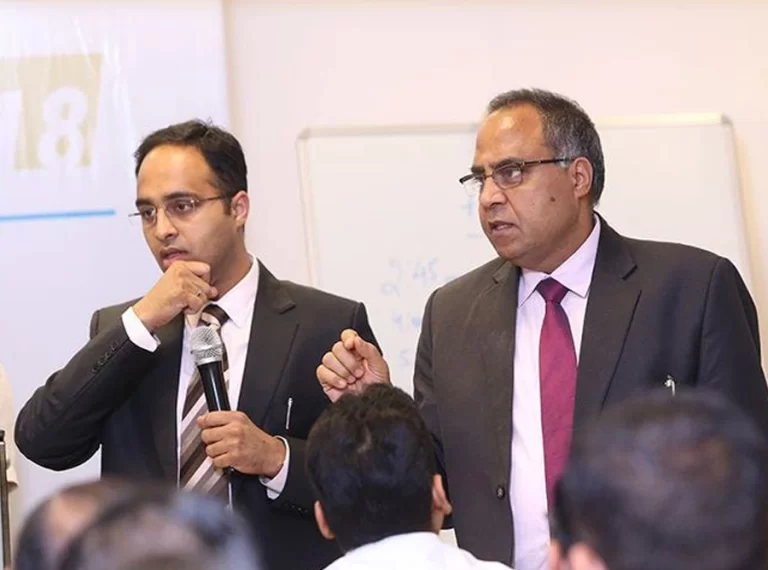
Nipun Anand, CEO, Zeal Global Services Ltd. speaking at the Central Asia Air Cargo Summit
Zeal Global Services Ltd. (NSE: ZEAL), a leading air cargo logistics solutions provider, recently announced its strategic plans to expand operations into Central Asia. The announcement was made on October 1, 2026, at the Central Asia Air Cargo Summit in Tashkent, Uzbekistan, where the company outlined its vision to capitalise on the region’s emergence as a critical air freight corridor.
Uzbekistan’s air cargo market has grown 182% from 2019 to 2024, with volumes rising another 33% in the first half of 2026 alone. The country aims to reach 300,000 tonnes of annual air freight capacity by 2036 through infrastructure upgrades and regulatory reforms. Tashkent International Airport processed 88,080 tonnes in 2025 and 48,189.6 tonnes in H1 2026, a 33.2% year-on-year increase.
Nipun Anand, CEO, Zeal Global Services Ltd., said: “Central Asia is one of the most underpenetrated yet high-growth air cargo markets globally. Our presence at the Tashkent Summit reflects our conviction that the region will become a critical freight corridor. We are committed to building efficient, reliable, and innovative logistics solutions that connect Central Asia with Europe, the Middle East, and Asia.”
Zeal Global’s expansion strategy focuses on four pillars: market intelligence on trade flows and regulations; infrastructure partnerships with airports and cargo terminals at Tashkent, Navoi, and Almaty; digital enablement through automated tracking and AI-driven forecasting; and sector-specific solutions for pharmaceuticals, electronics, automotive, engineering goods, perishables, and e-commerce.
The Central Asia Air Cargo Summit #3 (September 30-October 1, 2026) brought together over 300 senior decision-makers from airlines, airports, freight forwarders, cargo terminals, GSSAs, logistics providers, e-commerce companies, regulators, and technology partners to explore opportunities shaping the future of air cargo in the region.