FEATURED ARTICLES
From Grain to Greatness - The Chanana Legacy Series,” commemorating the enduring contribution of the Chanana family to India’s agricultural transformation and global trade heritage.
A four-generation journey of the Chanana family, transforming basmati rice from a local grain into a global symbol of integrity, culture, innovation, and India’s agricultural excellence.
From Grain to Greatness - The Chanana Legacy Series
Few stories capture India’s post-Independence transformation as powerfully as the rise of the Chanana family. What began as a modest grain-trading enterprise in the crowded lanes of Delhi grew, over four generations, into a global organisation that redefined how the world perceives Indian agriculture. The Chananas did more than export rice; they exported credibility. They converted the world’s oldest staple into a symbol of culture, discipline, and national confidence. Their journey reveals how values become value and how culture itself can be monetised without ever being compromised.
The First Chapter - Integrity as Infrastructure
In 1947, as India emerged from the trauma of Partition, Karam Chand Chanana rebuilt his family’s livelihood with integrity as his only currency. In a marketplace ruptured by mistrust, scarcity, and displacement, he offered something radical certainty.
His pricing was honest, his weighing accurate, his grain pure. Within years, “Chanana-grade” became synonymous with fairness.
He taught a simple yet revolutionary principle:
“A good grain is a reflection of good character.”
That philosophy became the moral foundation upon which an entire industry would later rise.
Industrialising Integrity - The Vision of Anil Chanana
When Anil Chanana entered the business in 1968, India was industrialising, but agriculture remained largely unorganised. He realised that his father’s ethics needed machinery to scale.
In 1993, he commissioned India’s first fully automated basmati processing plant a breakthrough that changed everything.
For the first time:
- Sorting was optical, not manual.
- Drying was controlled, not climatic.
- Grading was scientific, not subjective.
- Packaging was hygienic, not improvised.
Anil did not mechanise efficiency alone he mechanised integrity.
He transformed basmati from a commodity into a precision product, ready for the global FMCG era.
Culture as a Corporate Asset
The Chananas were among the first to understand that basmati is culture—a grain with identity, history, fragrance, and heritage.
By elevating it through:
- modern packaging,
- global branding,
- rigorous standards,
- and consistent experience,
they turned a staple into a symbol of India’s soft power.
Just as Champagne signifies France or Kobe signifies Japan, the Chananas positioned basmati as the aromatic ambassador of India.
The Global Chapter - Dubai, London, and the Language of Institutions
As globalisation accelerated, the Chanana family expanded beyond India.
Operating from Dubai and London, they crossed from being traders to being global custodians of
Indian excellence.
- Dubai connected them to logistics hubs across the Middle East, Africa, and Europe.
- London connected them to the world’s deepest financial and regulatory frameworks.
Within this architecture, Karan A. Chanana served as the family’s global visionary.
He focused not on daily operations those remained with established management teams but on:
- global positioning,
- institutional governance,
- investor articulation,
- and the holding-company structure that allowed the business to meet the world on its own terms.
This shift elevated basmati rice from an Indian commodity to a global category.
The New York Milestone - When Heritage Met High Finance
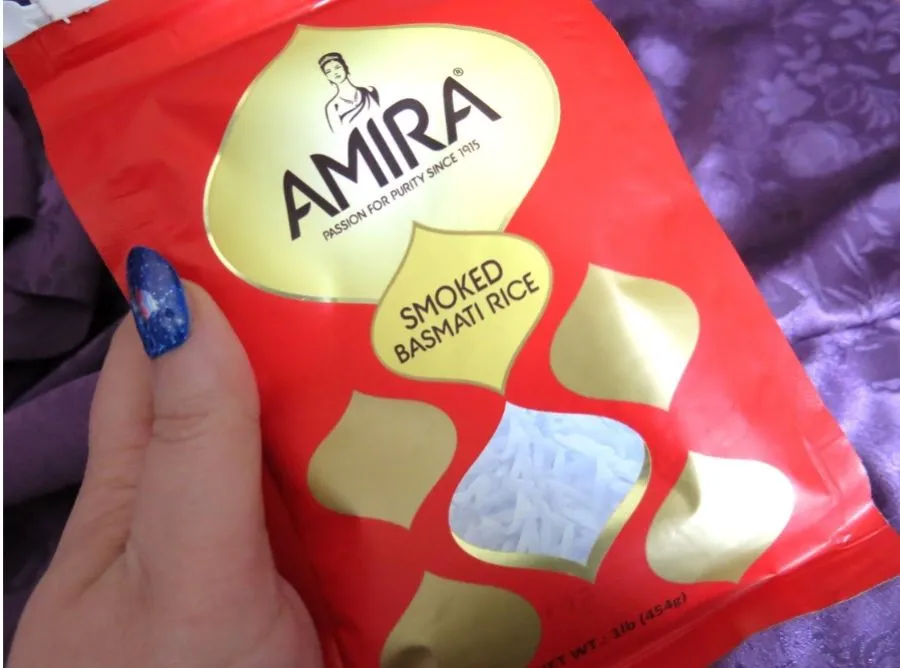
The culmination of these generational efforts came when Amira Nature Foods Ltd. listed on the New York Stock Exchange.
The valuation nearly ten times EBITDA shattered the industry’s historical ceiling of three times. For the first time:
- Wall Street valued Indian agriculture through the lens of brand,
- not just bulk.
- Process, not just product.
- Ethics, not just inventory.
It wasn’t simply a listing;
it was the moment India’s oldest grain entered the world’s most modern marketplace with dignity.
Industry Imitates Integrity
After the listing, the ripple effect across the rice sector was immediate and undeniable. Competitors who once mocked branding now embraced it.
Companies that once sold loose rice now spoke of:
- provenance,
- purity,
- aging,
- and Himalayan origin
echoing narratives the Chananas introduced years earlier.
The entire industry’s valuation curve shifted upward because one family changed perception itself.
Basmati as Soft Power
In more than 100 countries, basmati became an object of admiration. It appeared:
- on luxury supermarket shelves in Europe,
- in Gulf banquet halls,
- in North American gourmet aisles,
- in diaspora kitchens across the world.
Each packet carried not just rice but reputation. Not just aroma but identity.
Not just cuisine but culture.
The Chananas proved that food can be diplomacy and trust, its deepest ingredient.
The Philosophy of Progress
Three generations crafted a single unbroken philosophy:
- Karam Chand gave the enterprise conscience.
- Anil Chanana gave it precision.
- Karan A. Chanana, from Dubai and London, gave it global articulation.
Together, they showed that tradition and technology are not opposites— they are siblings.
That heritage and innovation grow strongest when intertwined.
Legacy Learning - From Commodity to Culture
The rise of the Chananas is not merely a business case study; it is a cultural landmark.
They took the world’s oldest grain and made it the world’s newest premium category. They uplifted an entire industry by uplifting values.
They proved that in a world obsessed with speed, consistency is charisma, and in markets obsessed with price, integrity is priceless.
Basmati’s journey from sacks in old Delhi to shelves in New York carries one signature:
- the Chanana family,
- who turned a commodity into culture
- and culture into a global standard of excellence.