EDTECH
Ashoka University Founder Vineet Gupta Answers - Can India Turn Higher Education Into a Global Export Strength?
Ashoka University Founder Vineet Gupta explains why India’s education export ambitions need credible campuses, transparent student pathways, global trust, and execution beyond affordability alone to succeed.
Ashoka University Founder Vineet Gupta Answers - Can India Turn Higher Education Into a Global Export Strength?
For years, India’s place in the global education economy has been shaped by one dominant image: millions of Indian students leaving the country to study abroad. The United States, the United Kingdom, Canada, Australia and parts of Europe have built strong appeal among Indian families because they offer academic reputation, global exposure, research opportunities and clearer career pathways after graduation.
But a reverse possibility is now beginning to enter the conversation. Can India, long seen as a source market for international universities, also become a serious destination for global learners?
The question is becoming important because international education is now a major services export opportunity. UNESCO data shows that global student mobility has grown sharply, with 7.3 million students studying outside their home countries, compared with about 2 million in 2000. At the same time, India is still a relatively small player in attracting foreign students, despite having one of the world’s largest higher education systems.
Government data shared in the Rajya Sabha shows that India hosted 72,218 foreign students from nearly 200 countries. The Study in India platform has also created a more formal admission route, with more than 600 partner institutions and over 8,000 courses listed for international applicants.
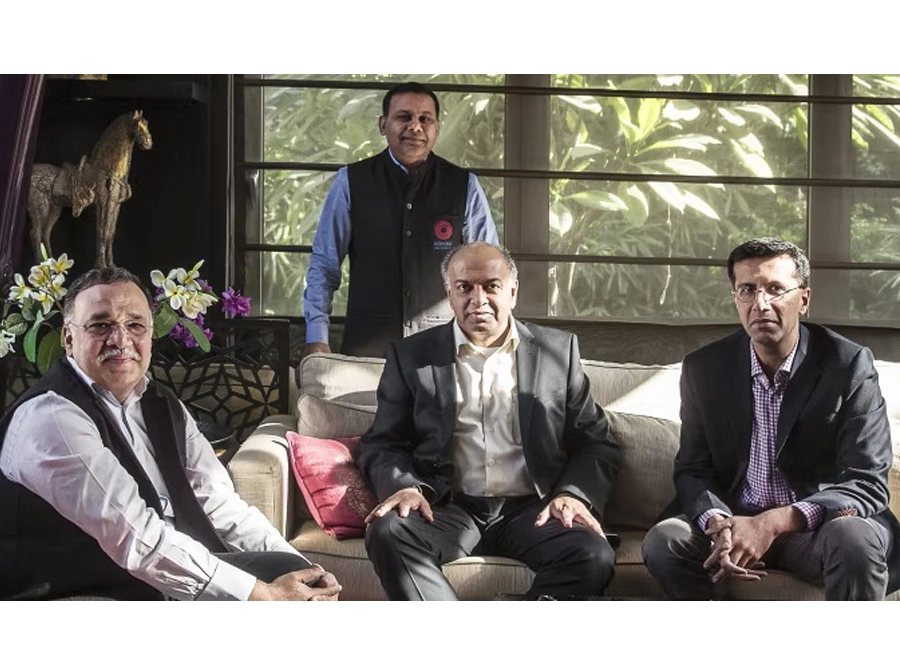
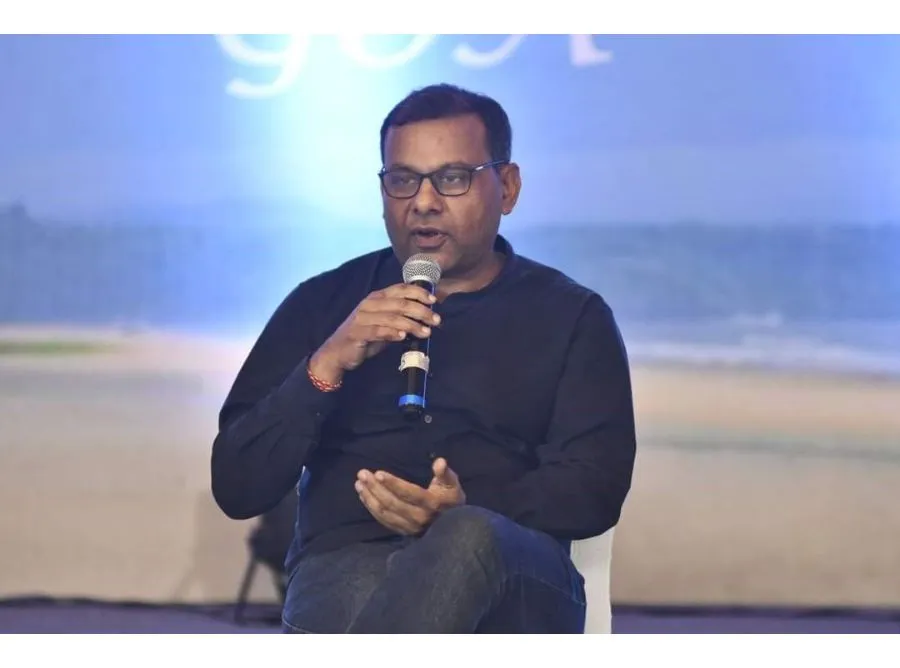
These numbers suggest progress, but they also show how much distance India still has to cover. According to Vineet Gupta - Founder of Ashoka University and Plaksha University, India’s education export ambition will need to move beyond broad promotion and focus on trust, quality and student experience.
“Instead of trying to attract international students in a generic way and saying they should come to India to study, we need to identify colleges and campuses that can genuinely offer quality education, strong faculty mentorship, good infrastructure, safety and a complete student experience,” Vineet Gupta said. He further added, “India should have an agency that rates campuses from the perspective of foreign student attractiveness. Let these ratings be published. This will make choices transparent for international students.”
That idea changes the frame of the debate. The issue is not whether India has enough universities. The more relevant question is whether India has enough campuses that are ready to compete for global students on academic quality, safety, housing, healthcare, internships, local support and employability.
For an international student, choosing a study destination is rarely only about tuition cost. It is also about whether the campus feels reliable, whether the city is safe, whether the degree has value, whether there are career pathways, and whether there is support before and after arrival. Countries that have built strong education export models have understood this well.
Australia, the UK, Germany, France and Singapore have not grown their international education appeal only through universities. They have invested in national branding, international student offices, visa support, overseas outreach, post-study options and clear information systems. In that sense, education exports are not built by institutions alone. They are built by ecosystems.
India has some advantages. It has scale, cost competitiveness, English-language academic capacity, a large pool of faculty and a growing private higher education sector. It also has distinctive areas of knowledge that few countries can offer with the same depth, including yoga, Ayurveda, Sanskrit, Buddhist studies and Indian knowledge systems. Alongside these, India has strong capability in technology, management, public policy, healthcare, sustainability, entrepreneurship and digital learning.
But affordability alone will not create global trust. If India wants to be seen as a serious study destination, it will need to identify export-ready campuses and make that information visible to students and families abroad. A transparent rating system, as Gupta suggests, could help separate campuses that are genuinely prepared from those that are only interested in adding foreign enrolments.
Such a system could assess academic credentials, faculty quality, residential capacity, international student support, safety, healthcare access, industry linkages, internship opportunities and placement pathways. It could also help prevent international recruitment from becoming a numbers-driven exercise.
The second issue is facilitation. India has taken steps through the Study in India portal, which offers a centralised interface for admissions and guidance. But for global competitiveness, the experience has to become smoother across the entire student journey. Admissions, visas, local registration, accommodation, health insurance, internships and career counselling cannot function as disconnected processes.
Gupta believes this experience layer is central to India’s ability to compete.
“For an international student, education is not only about the classroom. Safety, visa simplification, accommodation, internships and career support are all part of the decision. India will have to think from the student’s perspective if it wants to compete globally,” he noted.
The third area is employability. Many students choose a country not just for the quality of education, but for the opportunity to gain practical exposure after the programme. India may not need to design this as a large immigration pathway, but it can create clearer rules for internships, apprenticeships, industry projects and short-term professional experience for foreign students.
That could be particularly powerful in sectors where India already has global relevance. Technology, digital business, management, healthcare services, design, sustainability, public policy and entrepreneurship can become attractive learning areas if they are connected to real industry exposure.
Education services can also go beyond bringing students physically to Indian campuses. India can build export potential in online learning, admissions review, curriculum development, academic operations, research support, digital outreach and executive education. This is where the larger services export story becomes relevant.
India’s success in global capability centres shows what is possible when talent, scale and global demand come together. According to the Nasscom-Zinnov GCC Landscape Report 2026, India has more than 2,100 global capability centres, employing over 2.36 million professionals and generating nearly $100 billion in revenue. These centres have shown that India can move beyond low-cost delivery and become a base for high-value global work.
For Gupta, the same ambition can be brought into education services.
“If India can become a hub for global capability centres, why can’t we think with the same ambition in education services?” Vineet Gupta said. “We have the talent and the cost advantage. What we now need is a first mover success case.”
That first mover success case will matter because global education is built on reputation. Once a few campuses show that India can deliver quality, safety, support and career relevance to international students, the larger system can gain confidence. Without such examples, India’s pitch may remain limited to affordability.
The timing is important. Inbound student numbers are improving, foreign campuses are entering India, and policy intent around internationalisation has become clearer. But the next phase will require more disciplined execution.
India does not need to sell itself only as a cheaper alternative to Western education. It needs to build a more confident proposition: credible campuses, transparent information, smoother pathways, academic depth, cultural distinctiveness and employability.
For decades, India sent students to the world. The next opportunity is to bring more of the world’s students to India. Whether that becomes a serious export story will depend not on ambition alone, but on whether India can build education systems that international students can trust.