HEALTHCARE
Making Medical Treatment More Accessible: Jose Peter on Financing, Price Discovery, and Healthcare Partnerships
Arogya Finance Co-Founder Jose Peter explains how healthcare financing, responsible lending, price discovery and industry partnerships can help families overcome affordability barriers and access necessary medical treatment.

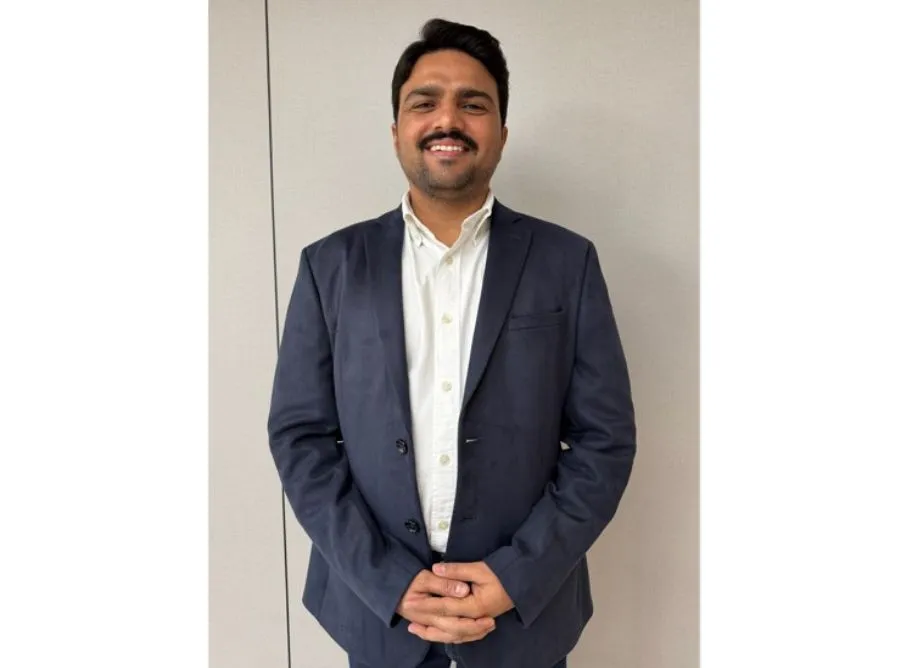
Jose Peter, Co-Founder and CEO of Arogya Finance
For many families, accessing quality healthcare is not just a medical challenge but a financial one. In this conversation, Jose Peter, Co-Founder and CEO of Arogya Finance discusses how healthcare financing, responsible lending, price discovery, and collaboration across the healthcare ecosystem can help address affordability barriers and improve access to treatment.
1. Healthcare is often treated as a medical issue, but for many families, it is also a financial crisis. What made you look at healthcare through the lens of affordability?
For a family, a medical emergency is rarely about the treatment alone. It is also about finding the money at a time when every decision feels urgent. Many times, a suboptimal treatment is administered because the best treatment may not be affordable for the family.
My initial exposure to healthcare taught me that affordability is the single biggest barrier to quality healthcare and that a person’s need for treatment does not always align with their ability to pay upfront.
This understanding shaped the idea behind Arogya Finance. We wanted to create a financing solution that could reach patients when they needed it, including people who might not fit the conventional lending model. For me, the larger purpose is to help ensure that financial constraints do not become the deciding factor in whether a family can pursue necessary medical treatment.
2. Many people assume that a bank loan is the answer when medical expenses exceed their savings. Why is healthcare financing different from conventional lending?
Conventional lending often relies on established income records, salary slips, collateral, or other indicators of repayment capacity. Many banks stay away from lending for critical illness, believing that the risk is high. Arogya Finance, as a specialized healthcare finance company, has developed methodologies to manage these situations.
Healthcare financing presents a different challenge because the need can be urgent, and the borrower may not have time to arrange conventional documentation. At the same time, lending responsibly remains essential. We cannot solve one financial problem by creating another.
At Arogya Finance, we use a specialized risk-assessment approach designed to evaluate borrowers beyond conventional documentation alone. The objective is to understand the applicant’s circumstances and repayment capacity while making the process more accessible.
The important distinction is that access and responsible lending must go together. Making credit available is only part of the solution; the repayment structure must also be manageable for the family.
3. How do you balance the urgency of a medical emergency with the need to lend responsibly?
Speed matters in healthcare, but speed alone cannot define a good lending process. A loan that is approved quickly but leaves a family struggling with repayments and high interest rates will not solve the problem adequately.
Our approach combines technology, credit assessment, and a process designed around the point at which financing is needed. Digital applications, automated assessments, and healthcare-provider integrations can help reduce friction in the loan journey. At the same time, we need to evaluate the borrower’s circumstances and the affordability of the proposed repayments. Most loans provided by Arogya Finance are interest-free and fully subsidized by the healthcare provider!
We also facilitate payment directly to the healthcare provider, ensuring that the loan is used for its intended medical purpose.
For us, responsible lending means considering both sides of the decision: whether the patient can access the required financing and whether the resulting repayment obligation is reasonable. The aim is to support treatment without losing sight of the family’s financial situation after discharge.
4. Medical insurance is often seen as the primary safeguard against healthcare costs. Where does medical financing fit into the picture?
Insurance and medical financing serve different purposes. Insurance provides coverage according to the terms of a policy, while a medical loan provides credit that the borrower must repay over an agreed period.
There are situations where families may be uninsured or underinsured, or where they need to arrange money for treatment before reimbursement is received. In such cases, financing may help address an immediate cash-flow requirement. However, a loan is not a substitute for insurance, and it does not eliminate the cost of treatment.
At Arogya Finance, we focus on helping patients meet healthcare expenses when upfront payment becomes a barrier. Our financing solutions can help eligible borrowers spread the cost over time, subject to the applicable loan terms.
5. A medical loan can help a patient access treatment, but it can also create financial pressure later. How should families decide whether borrowing is the right option?
The first question should be whether the proposed repayment is affordable, not simply whether the loan is available. Families need to consider their regular income, essential household expenses, existing EMIs, and the possibility that earnings may be disrupted during recovery.
They should also understand the interest rate, processing charges, tenure, and total amount payable. A lower monthly EMI may appear attractive, but a longer repayment period can affect the overall cost of borrowing.
At Arogya Finance, we believe financing should be approached with a clear understanding of the borrower’s circumstances. Our objective is to make medical credit more accessible while keeping repayment affordability central to the process.
I would encourage families to ask questions before committing to a loan and to borrow only what they need. Healthcare financing should help them manage an immediate expense; it should not leave them without enough money for basic household needs in the months that follow.
6. Arogya Finance works with pharmaceutical companies as well as hospitals and healthcare providers. Why is this broader ecosystem important to solving healthcare affordability?
Healthcare affordability cannot always be addressed through lending alone. In some cases, the treatment itself may be beyond a patient’s financial reach, even if a repayment option is available. This is why we look at affordability as a broader challenge involving patients, healthcare providers, and pharmaceutical companies.
Our work includes bespoke financing solutions and price-discovery approaches that can help identify treatment pricing suited to different patient circumstances. This is done through a socio-economic evaluation of the patient’s family. Financing can help spread payments over time, while appropriate pricing arrangements can help make certain treatments more accessible.
Our partnerships are important because they connect these solutions with the places where treatment is prescribed, delivered, and purchased. They also help us understand the specific financial barriers faced by different patient groups.
7. Your work includes price discovery for expensive treatments. How can this help patients without compromising the value of medical innovation?
Medical innovation can bring important treatment options to patients, but the cost of developing and delivering those treatments can make them inaccessible to a large section of the population.
When patients cannot afford a prescribed treatment, both the patient and the healthcare ecosystem face a challenge.
Price discovery is a methodology to address part of this problem by examining what different patients may be able to afford and developing suitable pricing approaches in collaboration with relevant partners. When combined with financing, this can help bridge the gap between the cost of a treatment and a patient’s ability to pay.
This is not about assuming that every treatment can be made affordable through a single pricing model. Each situation has to be assessed on its own merits, with the interests of patients and the sustainability of the healthcare business both considered.
I believe the conversation needs to move beyond the idea that affordability is solely the patient’s responsibility. There is room for collaboration across the ecosystem to explore ways of widening access to valuable treatments.
8. Building a healthcare financing business requires financial discipline as well as an understanding of patients’ needs. How has your experience in finance shaped your approach as a founder?
My experience in finance has taught me that building a sustainable lending business requires discipline in credit assessment, risk management, governance, and operations. At Tata Motors Finance, I was part of the senior team that scaled a USD 3 billion retail loan portfolio in four years. I also worked as Group CFO at Ion Exchange India and gained experience across financial management and institutional leadership.
These experiences reinforced the importance of building systems that can operate at scale without losing sight of risk. In healthcare financing, that discipline becomes particularly important because the decisions are connected to patients facing difficult circumstances.
As a founder, I have had to bring together two priorities: understanding the problem we are trying to solve and building a business capable of addressing it sustainably. A strong social purpose needs a sound operating model behind it.
For Arogya Finance, that means combining our understanding of lending with technology, risk assessment, and partnerships. The ambition is meaningful, but delivering on it requires consistency in everyday decisions.
9. How do you measure success when the impact of your work is connected to something as personal as a family’s access to medical treatment?
Financial performance is necessary for a lending business to remain sustainable, but it is not the only way to understand the value of the work. In healthcare financing, we also need to look at whether our solutions are reaching patients who face genuine barriers to accessing credit.
That means considering the reach of our healthcare partnerships, the accessibility of our application process, the quality of our lending decisions, and whether repayment structures are appropriate for borrowers. It also means understanding where patients encounter difficulties and using that learning to improve the process.
Ultimately, I would like Arogya Finance to be judged by how responsibly it grows and how effectively it helps bridge the gap between healthcare needs and financial access.
10. What needs to change for healthcare financing to become a more established part of India’s healthcare ecosystem?
Healthcare financing needs greater awareness, stronger collaboration, and lending models that recognize the diversity of India’s population. Many people still associate formal credit with salaried employment, conventional documentation, and large financial institutions. That leaves room for solutions designed around people whose income patterns and financial circumstances are different.
Technology can make the process more convenient, but technology alone is not enough. We also need sound risk assessment, transparent loan terms, appropriate repayment structures, and partnerships that connect financing with healthcare delivery.
For the sector to grow responsibly, patients must understand that medical loans are repayable credit, not grants or insurance. Healthcare providers and financing companies also need to communicate clearly about costs, eligibility, and repayment obligations.
At Arogya Finance, our focus is on extending access to medical financing while maintaining the discipline required in lending. I see the opportunity in building a healthcare ecosystem where financial solutions are considered alongside other affordability measures so that more families can understand their options when treatment costs become difficult to manage.